
Inside the nursery
A real day at Mokabat Nursery, from the front door to the last message
A day at Mokabat follows the same steps every time, so children know what is coming: a welcome by name at the door, a good-morning circle, learning through play with letters, numbers and colours, time to run and climb, and a short update that reaches you on WhatsApp. Timings shift a little by age, but the order stays the same.
Why we show you our day
When you hand your child over, you should know what happens after the door closes. Here is our real routine, as it appears in the clips on the nursery's own page. If you are still comparing options, our 12 questions for choosing a nursery in Mansoura will help you ask every nursery the same things.
- At the doorEvery child is greeted by name.
- Circle timeGood morning, and we talk about our day.
- Letters and numbersLearned through games and movement.
- Colours and blocksChoosing, sorting and building.
- Play and movementTime in the play area.
- Today's messageA short update on WhatsApp.
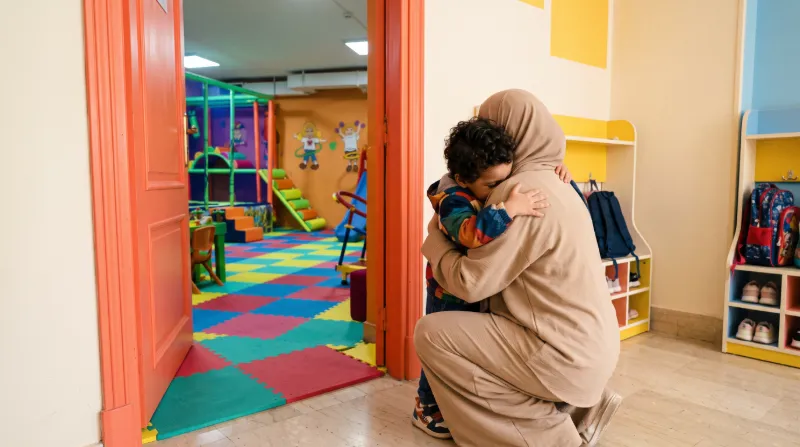
At the door: a welcome by name
The first minute sets the tone for the whole day. Hearing their own name said warmly tells a child they were expected and that they belong. It also helps the children who find goodbyes hard, which we cover in our guide to the first day at nursery.
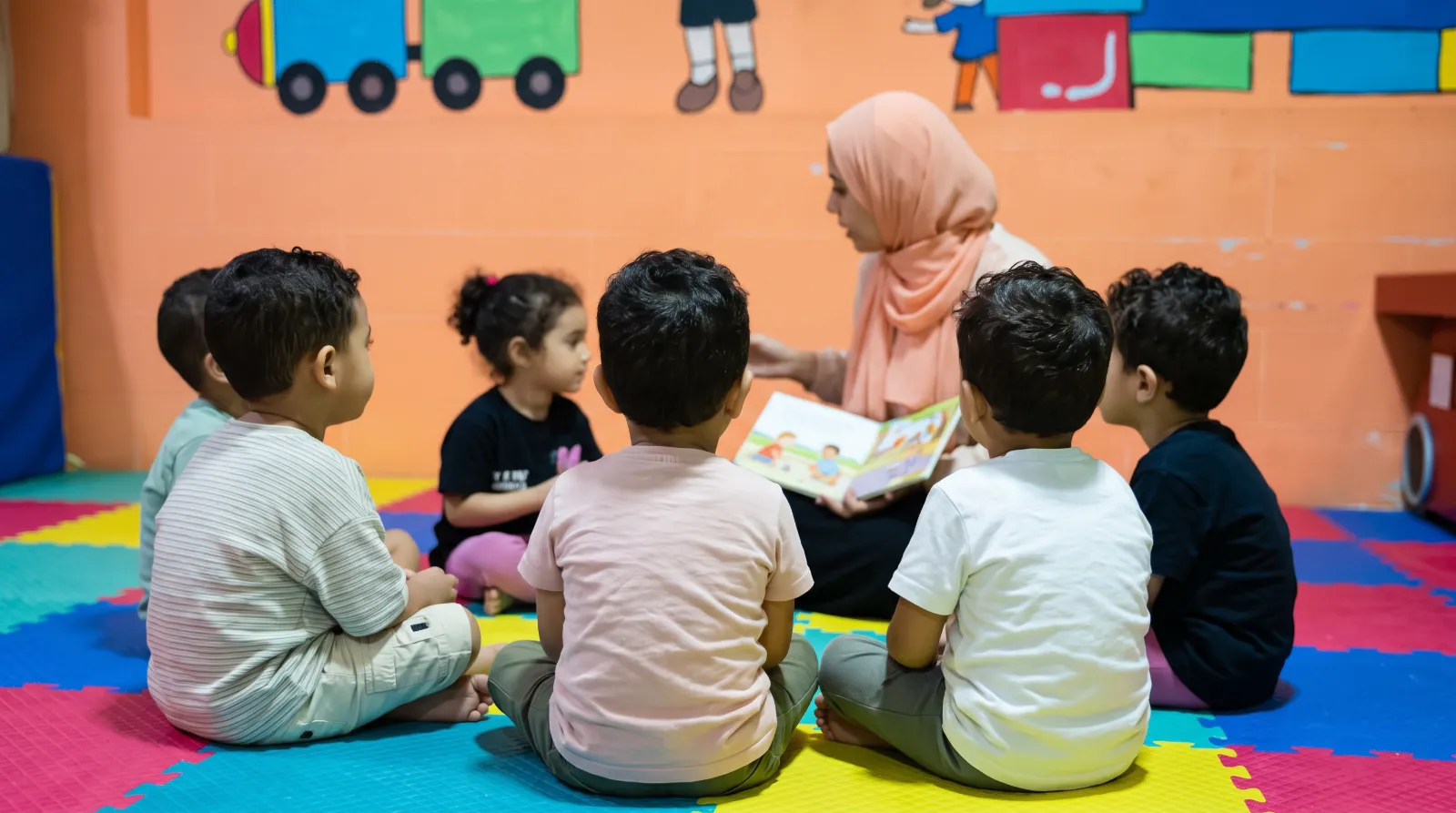
Circle time
We sit together in a circle, say good morning and talk about the day ahead. Circle time quietly teaches a lot: waiting for a turn, listening to others and speaking up in a small group. Shy children tend to grow a little bolder each week.
Learning through play: letters, numbers, colours
In our real clips you can see a boy sticking letter cards on the board, a girl picking a number card and children playing a colours game on the screen. The idea is always the same: children learn while they move, choose and touch, not while they sit still. We work in Arabic and English, so new words arrive inside a game the child already enjoys. For families who speak English at home, that means English is part of the day, not a separate lesson.
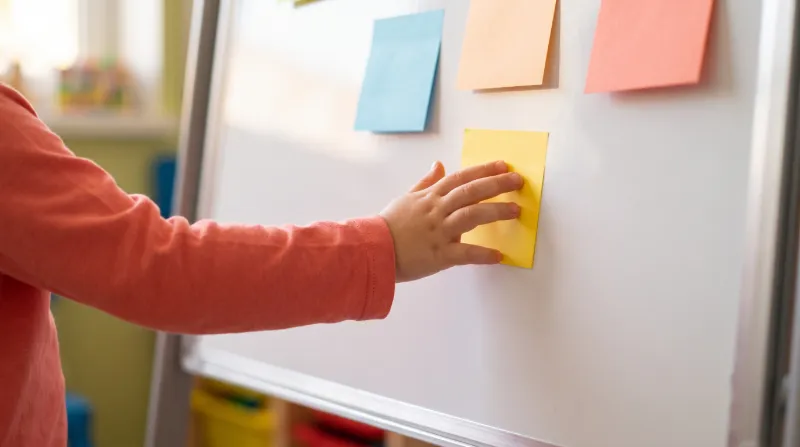
There are discovery activities too: a child opening a box to find out what is inside, another choosing their own colours. Small moments like these build curiosity, patience and confidence in making choices.
Play and movement
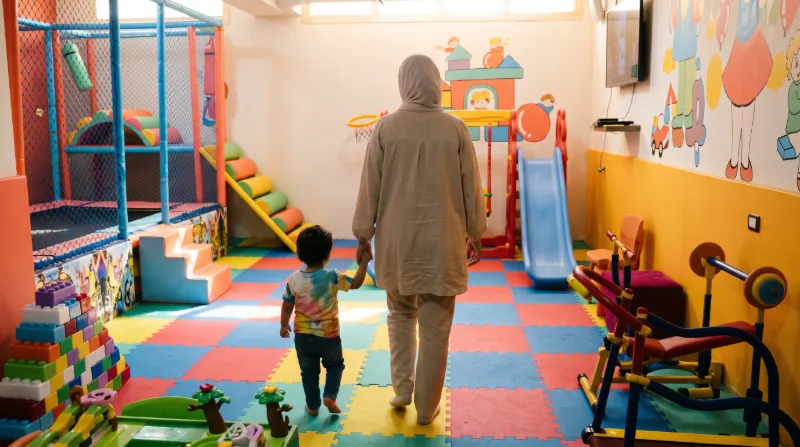
Small children need to move. The play area has soft floors and toys matched to age, including a ball pit and slide, a toys corner and a play kitchen. One of our clips shows children jumping through hoops laid on the coloured mats. Movement is not a break from learning; balance, coordination and playing alongside others are skills in their own right.
Blocks and colours
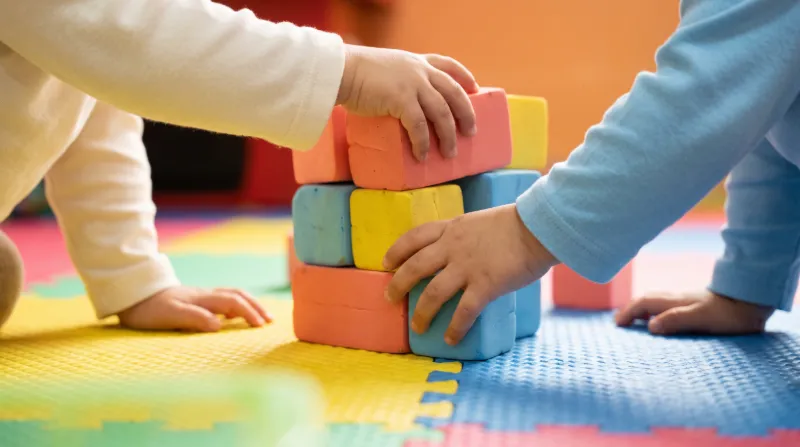
Our name is not an accident. Blocks are one of the simplest and richest toys there is: children build, knock down and try again, learning colour, size and patience at once. When two children build one tower, they also learn to negotiate.
Today's message
At the end of the day a short update reaches you on WhatsApp. If a teacher notices something in your child's speech, play or behaviour, you hear straight away rather than at a monthly meeting. Every week you also get a three-line note: what your child learned, what we are working on, and one idea to try at home.
Each stage has its own rhythm
The order is the same for everyone; the content changes with the stage. In the first steps we focus on safety, warmth and a calm routine, with sensory play, first words, songs, and regular meals and naps. In the playing-and-talking stage come new words every week, colours and shapes, blocks and building, and playing with other children. In the ready-for-school stage we work on letters and numbers in Arabic and English, sitting in a group and confidence in front of others. See our programmes by age.
Home time: written pickup
Your child leaves only with the adult named on the enrolment form. A simple rule, and a big relief.
Frequently asked questions
Are activity times the same for every child?
The order is the same every day, but timings change slightly by age.
How will I know what my child did today?
A short WhatsApp update reaches you at the end of each day, plus a three-line written note every week.
Can I see the nursery before enrolling?
Yes. A ten-minute visit with the director covers the classroom, the play area, the routine and the meals. Book it on WhatsApp.
Do you offer a kids area or a few hours of care?
Yes, there is a kids area and hosting for a few hours when you need it, for an errand, an exam or an occasion. Ask for details on WhatsApp.
Last reviewed: · The Mokabat Nursery team