
Starting nursery
The first day at nursery: how to ease separation anxiety
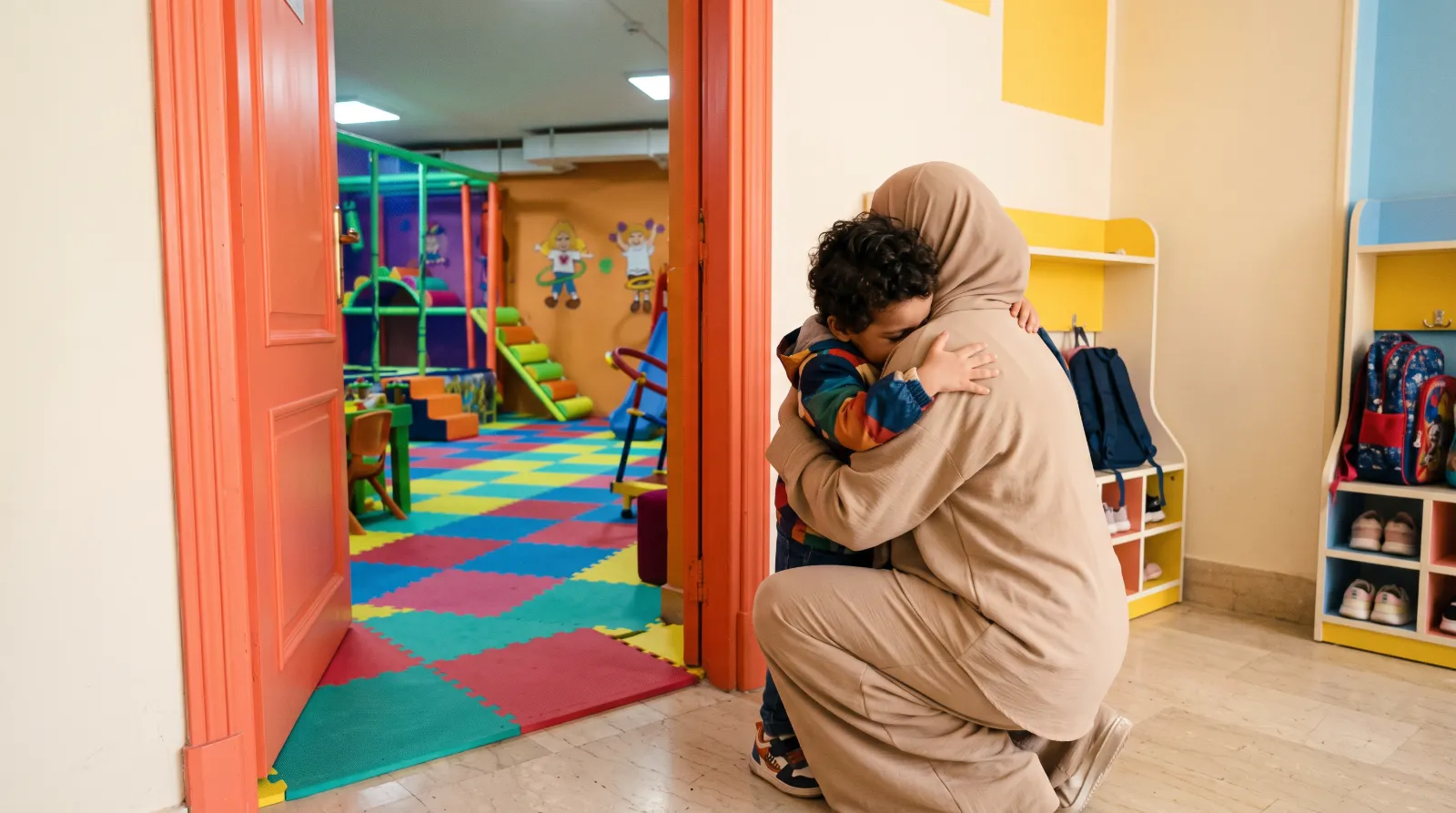
Separation anxiety is a normal stage for young children, and it usually shows up as tears or clinging at the nursery door. It does not mean you chose the wrong nursery or that your child is not ready. What helps most is a calm build-up in the week before, a short and clear goodbye, and the same routine every morning.
Why it happens now
Still deciding where to send your child? Start with our 12 questions for choosing a nursery in Mansoura, then come back. If the first day is already booked, here is what is going on. Toddlers have worked out that you are a separate person who can leave, but they have not yet learned that you always come back. So they protest when you go. It is a sign of a healthy attachment, not a parenting mistake.
The good news is that children learn by repetition. Every time you say "I'll be back" and then come back, the fear shrinks a little.
- A week beforePositive talk about nursery and a short visit together.
- The night beforeAn early night and a bag packed together.
- At the doorA hug, the same goodbye line, then go.
- At pickupA smile and "what was the best bit?"
- The rest of the weekSame time, same person, same ritual.
The week before
- Talk it up, simply. "You'll play with other children, there are blocks and colours, and I'll come and get you." Never use nursery as a threat.
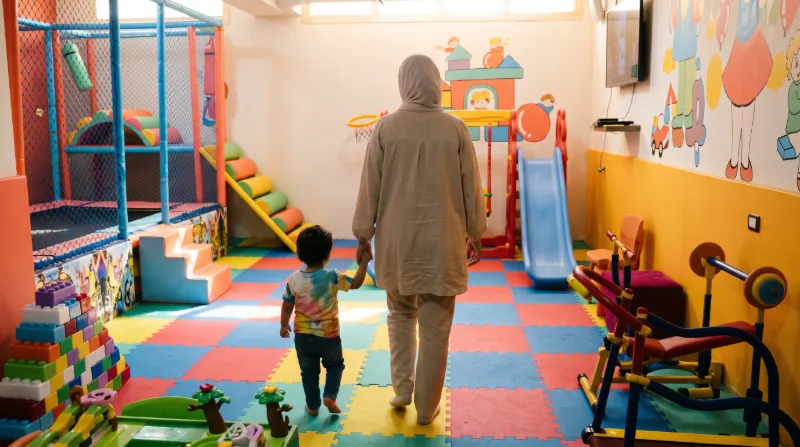
- Visit together. A short visit makes the place familiar. At Mokabat you can book a ten-minute visit to see the classroom and the play area.
- Play "going to nursery". Let a teddy say goodbye and come back. Play makes the idea less strange.
- Shift bedtime and wake-up towards nursery hours a few days ahead. Tired children cry sooner.
- Pack the bag together. Choosing the water bottle gives your child a small sense of control.
If your family speaks English at home
This is where many expat and returning families worry most, and a little preparation goes a long way. Write down the handful of words your child uses for the essentials: toilet, water, hungry, tired, and what they call you. Share the list with the teacher on day one. If your child knows a few Arabic words already, practise them as a game in the week before. Children in a mixed-language day usually start by understanding far more than they say, so silence in the first weeks is not a bad sign.
The first morning: keep the goodbye short
Pick a simple ritual you can repeat every day: a hug, a kiss and the same line, such as "I'll see you after playtime." Link your return to something in their day rather than a time on the clock.
Do not sneak out while your child is busy. It feels kinder in the moment, but it teaches them you might vanish at any time, and the clinging gets worse. Say goodbye clearly, leave calmly, and do not come back from the doorway if they cry. Your calm face tells them this place is safe.

What if they cry?
Tears at the door are expected, and many children settle soon after the parent leaves, once play takes over. At pickup, ask the teacher how the day went, when your child settled and what they enjoyed. Greet your child with a smile and ask about the best part of the day rather than "Did you cry?"
The first two weeks
Keep drop-off at the same time and, where possible, with the same person. A little extra clinginess or a wobble in sleep at home is common while a child adjusts to such a big change. Ask the nursery how it handles the first days, for example whether shorter days are possible at the start, and agree on what suits your child.
When to have a longer conversation
If long crying spells continue for weeks without improving, your child keeps refusing to eat at nursery, or you notice a change that worries you, sit down with the teacher and talk it through. If the worry is about health, your paediatrician is the right person to ask.
Frequently asked questions
How long do the first-day tears last?
It varies from child to child. Many settle within the first days or weeks with a steady routine; if the worry continues or grows, talk to the teacher.
Should I slip away while my child is playing?
Better not. A short, clear goodbye builds trust that you will come back; disappearing makes the fear worse.
My child only speaks English. Will they cope?
Share a short list of their key words with the teacher and practise a few Arabic words as a game. Children usually understand a new language long before they speak it.
How will I know how the day went at Mokabat?
A short WhatsApp update reaches you at the end of the day, and you can always ask the teacher at pickup.
Last reviewed: · The Mokabat Nursery team