
Skills development
Building skills through play: a stage-by-stage guide for parents
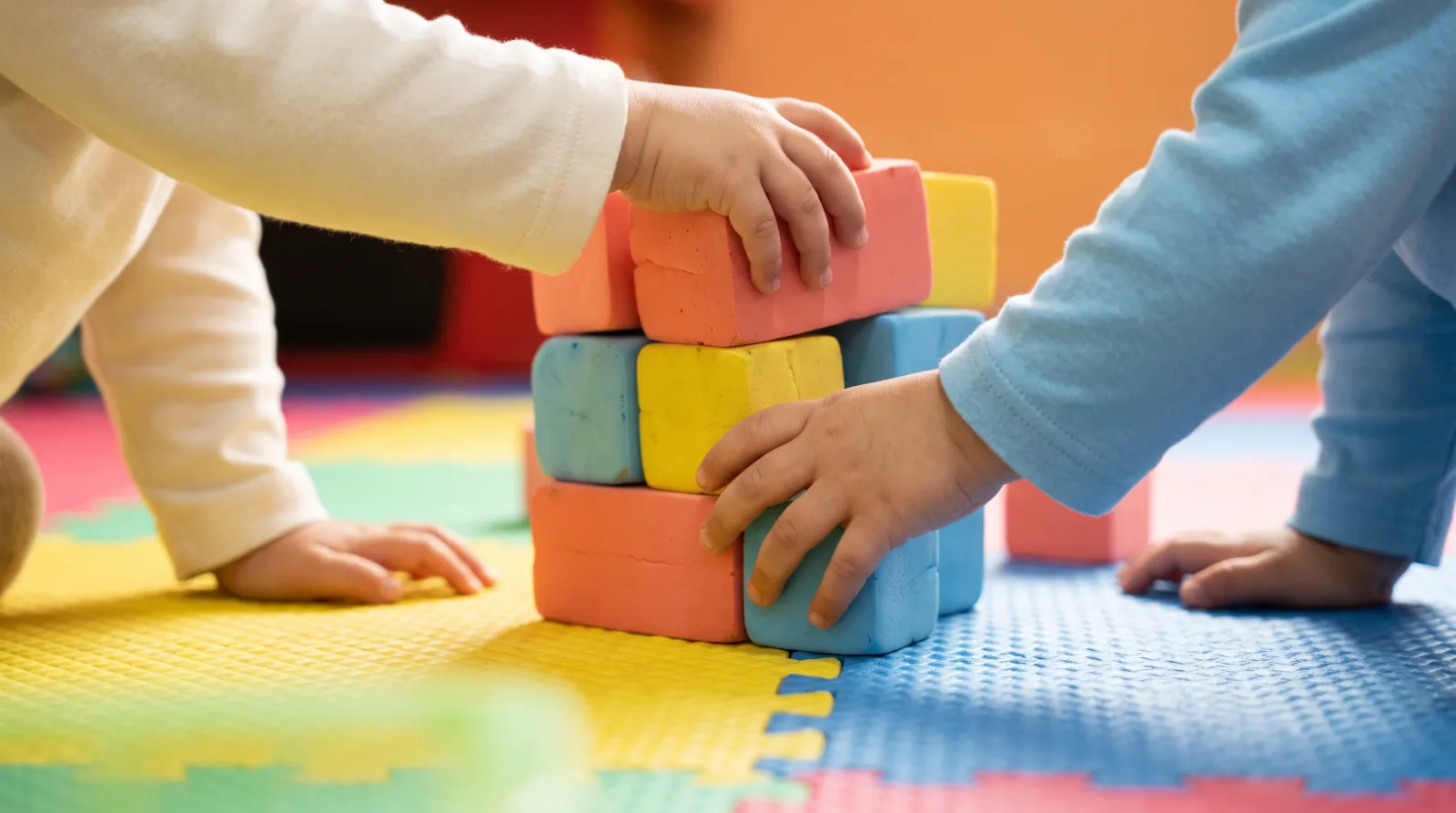
Play is how young children learn. Stacking blocks strengthens the hand and the attention span, running and climbing build balance, and playing with others teaches talking, waiting and sharing. You do not need expensive toys or screens, just a few minutes a day and a game that suits the stage your child is at.
What "learning through play" really means
It does not mean leaving children to play with no purpose, and it does not mean turning play into a lesson. It means choosing a game that carries a skill and letting the child discover it. A child sorting balls by colour is learning colours and categories without feeling taught. If you are looking for a nursery that works this way, our 12 questions for choosing a nursery in Mansoura will help you check.
- Blocks and buildingHand strength, focus and patience.
- Running and climbingBalance, coordination and body confidence.
- Sensory playExploring texture, sound and colour.
- Pretend playNew words, imagination and empathy.
- Group gamesTaking turns, sharing and following rules.
Four skills that play builds
Big movements: running, jumping, climbing
These build balance, coordination and confidence in the body. A slide, hopping between hoops laid on the floor or walking along a taped line are simple games that make a real difference.
Small hand movements
Holding a pencil later needs strong hands now. Stacking blocks, colouring with chunky crayons, squeezing play dough and picking up small objects (with you watching) are all good workouts.
Language and communication
Children learn words when they hear them tied to what they are doing. Narrate their play: "The red block is on top of the yellow one." Songs, stories and pretend play add new words without pressure. In a bilingual home, it is fine for each language to have its own games.
Social skills and feelings
Playing with others is where children learn to wait their turn, share a toy and lose a simple game gracefully. These are skills they will need at school even more than letters.
Play ideas by stage
Every child has their own pace, so we have grouped ideas by stage rather than by month. Pick what fits your child today and move on when they seem ready.
First steps
- A box of fabrics with different textures to explore.
- Action songs they can copy with clapping and pointing.
- Big soft blocks to stack, knock over and laugh about.
Playing and talking
- Colour sorting: balls or blocks into matching bowls.
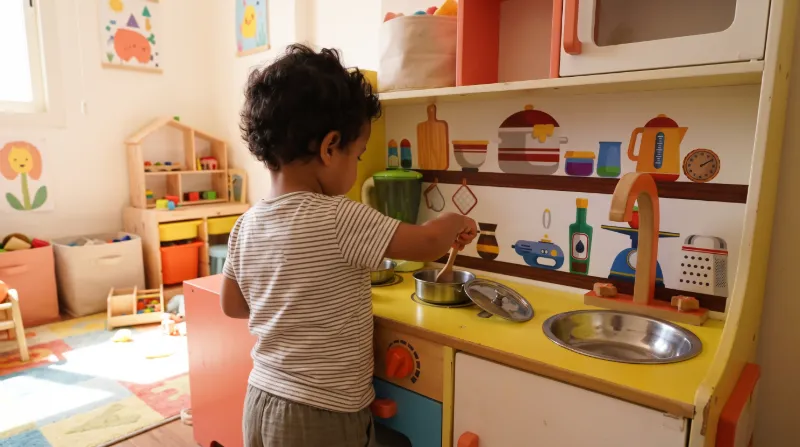
- A play kitchen or dolls to act out home life, while you ask "What are you cooking?"
- Building one tower with another child, taking turns.
Getting ready for school
- Letter and number cards to stick or put in order, in Arabic and English.
- Group games with simple rules, like "Who can find something green first?"
- Drawing, cutting and gluing to strengthen the hand before writing.
Screen-free play at home
Pick a short, regular slot, say ten minutes, with your phone out of reach. Let your child lead, and comment on what they do instead of giving instructions. Put out only two or three toys; too many scatter attention. If they lose interest, stop and try again later.
Frequently asked questions
How long should I play with my child each day?
Short and regular beats long and occasional. Ten minutes of calm play with you every day is a great start.
Do I need expensive educational toys?
No. Blocks, fabrics, bowls, chunky crayons and safe kitchen items are enough to build a lot of skills.
Are learning apps enough?
Young children learn most when they touch, move and talk with a real person, so keep real play at the centre.
How does Mokabat work on skills?
We build skills step by step through play, matched to each child's stage, and every week you get a note with what your child learned and an idea to try at home.
Last reviewed: · The Mokabat Nursery team